

House of Animals
Since time immemorial, we have lived alongside animals. For both parties, there were clear benefits to sticking together. A dog offered companionship and gave a warning when strangers approached the group. Dogs seemed to understand very well what humans wanted them to do.
We still love living with pets today. More than 27 million pets live in the Netherlands. Cats are the most popular, followed by dogs and … fish. Almost half of all households have one or more pets.
With 1.7 million of them in the Netherlands, dogs remain a very popular companion for humans. But are these animals always kept in the most animal-friendly way? Sadly, the answer is: no.
Research shows that two thirds of pet buyers did not look into what an animal needs to feel comfortable before buying one.
To meet demand, the Netherlands needs 150,000 additional dogs every year. That is, of course, an enormous number, which is why dogs are also brought in from abroad.
These are not only so-called 'rescue' dogs, but often also dogs from Eastern European puppy mills. In the Netherlands, 10,000 dogs per year are registered in TRACES (Trade Control and Expert System), which means 50,000 to 70,000 dogs enter our country unregistered. Most of these dogs are bred in Eastern Europe purely for commercial purposes.
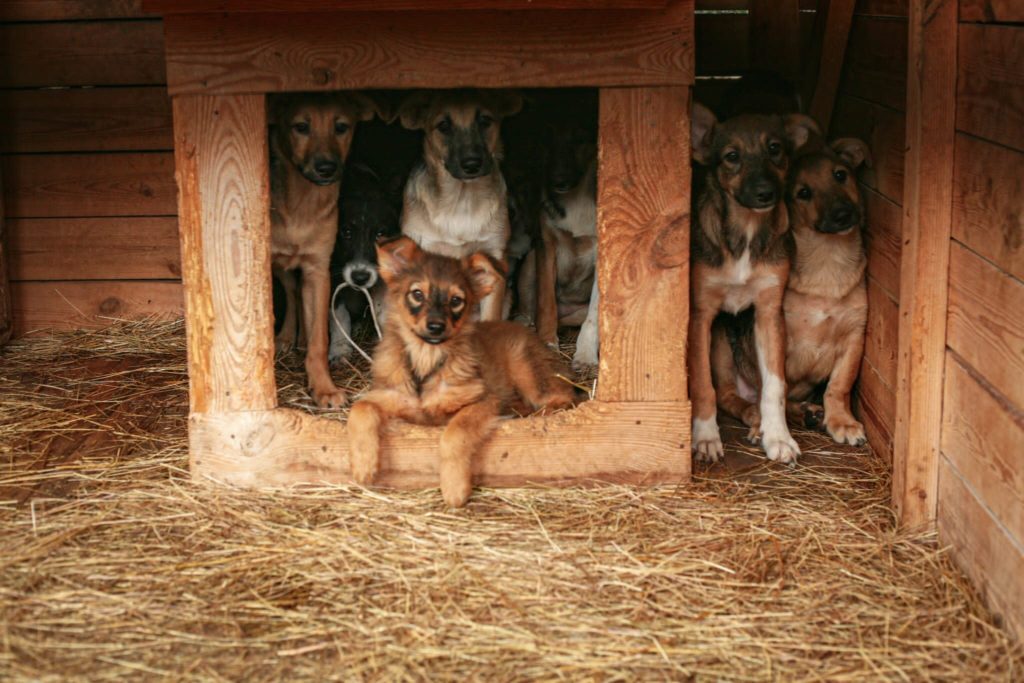
Puppies almost always come from puppy mills. It is all about earning as much money as possible while spending as little as possible on the animals' welfare. Many animals are often kept in small spaces. They get hardly any food, are not allowed outside, and receive no medical care.
The main goal is to produce as many puppies as possible in as short a time as possible. The females have litter after litter, and when they can no longer do so, they are killed or dumped on the street.
The puppies born at these kinds of puppy mills are not socialised and usually do not receive the mandatory vaccinations. They are taken away from their mother far too early, with all the consequences for their mental health later on.
The regulations regarding the import of dogs from abroad are clear. The animals must be at least 15 weeks old, vaccinated against rabies and registered. Unfortunately, there is hardly any enforcement, and rogue veterinarians in both Eastern Europe and the Netherlands cooperate in keeping the illegal trade going. As a result, far too young and often sick puppies are transported to countries including the Netherlands. An estimated 46,000 dogs are traded between member states every month. In the EU, 1.3 billion euros is earned annually from the dog trade.
People who want to buy a puppy often start their search online, usually on a platform such as Marktplaats. Unfortunately, the buyer is already at a disadvantage from this very first step. The dogs offered on Marktplaats often come from puppy mills.
But how do you recognise a puppy mill breeder or trader? Puppy mill breeders and traders usually advertise online using photos of puppies in a homely setting. These are often old photos or photos "stolen" from other sites. The pups are always supposedly 3 to 4 months old, fully vaccinated, chipped and dewormed. These traders often advertise under many different accounts, making it seem as if only one litter is on offer. In reality, these are traders who sometimes sell up to 3,000 puppies per year.
If you want to know more about how to recognise a puppy mill breeder, visit the House of Animals website.
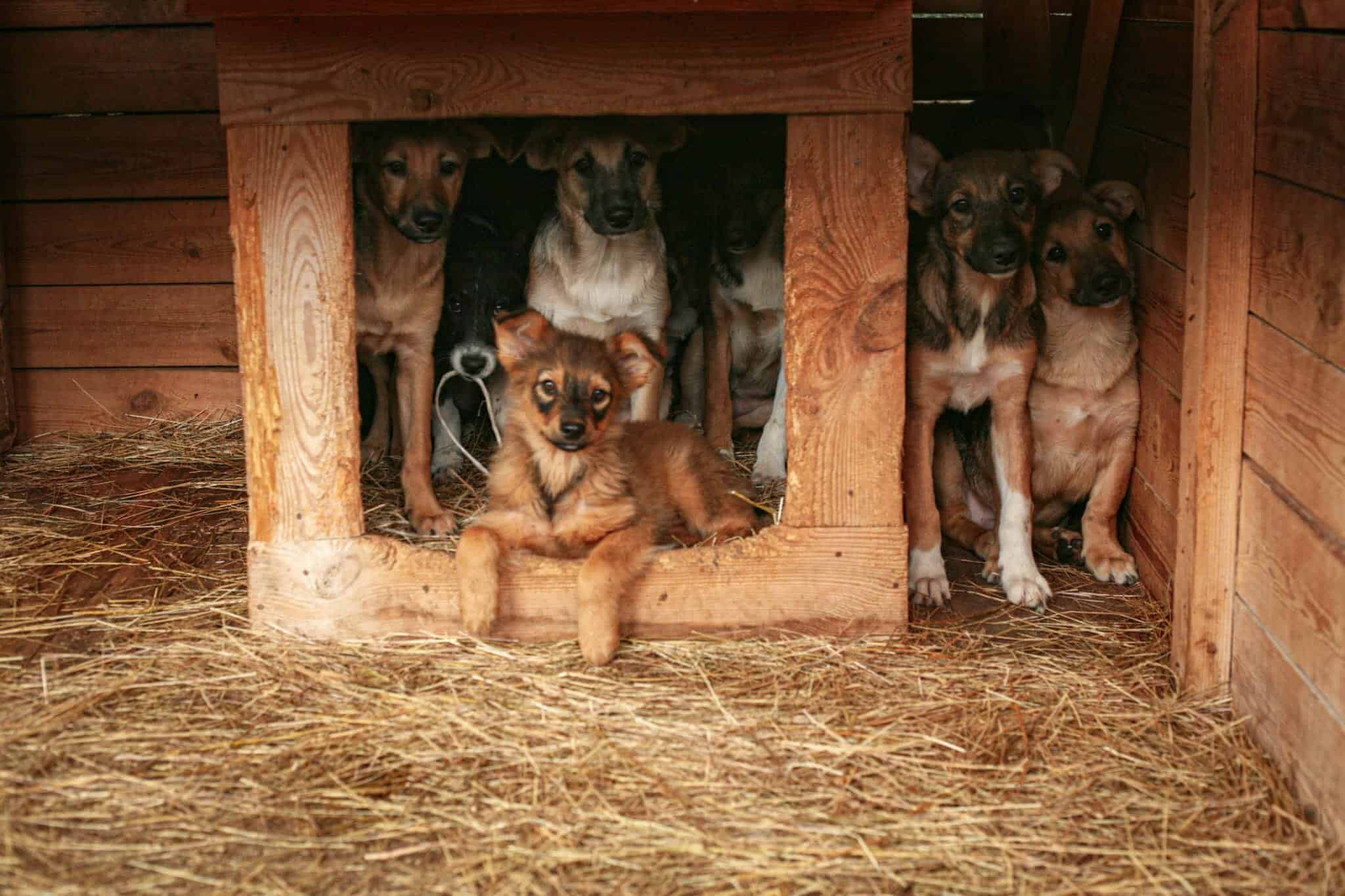
The Netherlands is also home to many so-called 'rescue dogs'. Dogs that lived on the streets or in shelters in Eastern and Southern Europe. To give these animals a better life, foundations take these dogs in and bring them to the Netherlands. Part of the demand for dogs in the Netherlands is met by importing these foreign stray dogs. That is, of course, a wonderful and animal-friendly solution, but especially and only if efforts are also made in the country of origin to bring the stray animal population under control in an animal-friendly way.
There are now around 300 foundations in the Netherlands working on this. Unfortunately, not every foundation turns out to be equally proper and reliable. Due to the enormous demand for dogs and the understandable urge to rescue animals, dogs are brought to the Netherlands that are not suited to life in a Dutch household. For example, they have not been socialised and are not used to contact with people. Dealing with that requires experience and guidance. Even that is sometimes not enough to give the dog a dignified life in a household.
For some dogs, they are "happier" as strays in their home country. Of course, there are also many wonderfully sweet and lovely ex-stray dogs available for adoption. But it is incredibly important to make the right choice here and not lose sight of the original goal – improving the welfare of stray dogs. One of the most frequently used Google search terms is "return adopted dog"… Acquiring a dog in an animal-friendly way, whether through adoption or purchase, requires a lot of thought. But once you have found a suitable match, it really is for life. And in this ideal match, we put the animals' interests at least on a par with our own, and together we create an animal-friendly society.
With House of Animals, we have resolved to put an end to the puppy mill trade within 5 years. We do this through undercover investigations, police reports, enforcement requests and much more.
House of Animals' success against a puppy mill trader
Facts
The largest puppy mill trader in Hilvarenbeek, who sold more than 3,000 puppies in the past year alone, has had to close its doors thanks to us.
In Eersel, we exposed the largest puppy mill breeder in the Netherlands. He has to close his doors, and a police report has been filed.
In Lelystad, we exposed a puppy mill breeder, and he too had to close his doors. Not long after, we discovered he had started a new business selling puppies from Eastern Europe at a business park in Wijchen. We got him removed from there as well.
In Chaam, a notorious puppy mill trader from Belgium settled after receiving a one-year professional ban there. This business also had to close following investigations and enforcement requests by House of Animals.
In Hungary, we filed reports against 6 veterinarians who cooperate in the illegal puppy trade. 2 of them have since been suspended.